
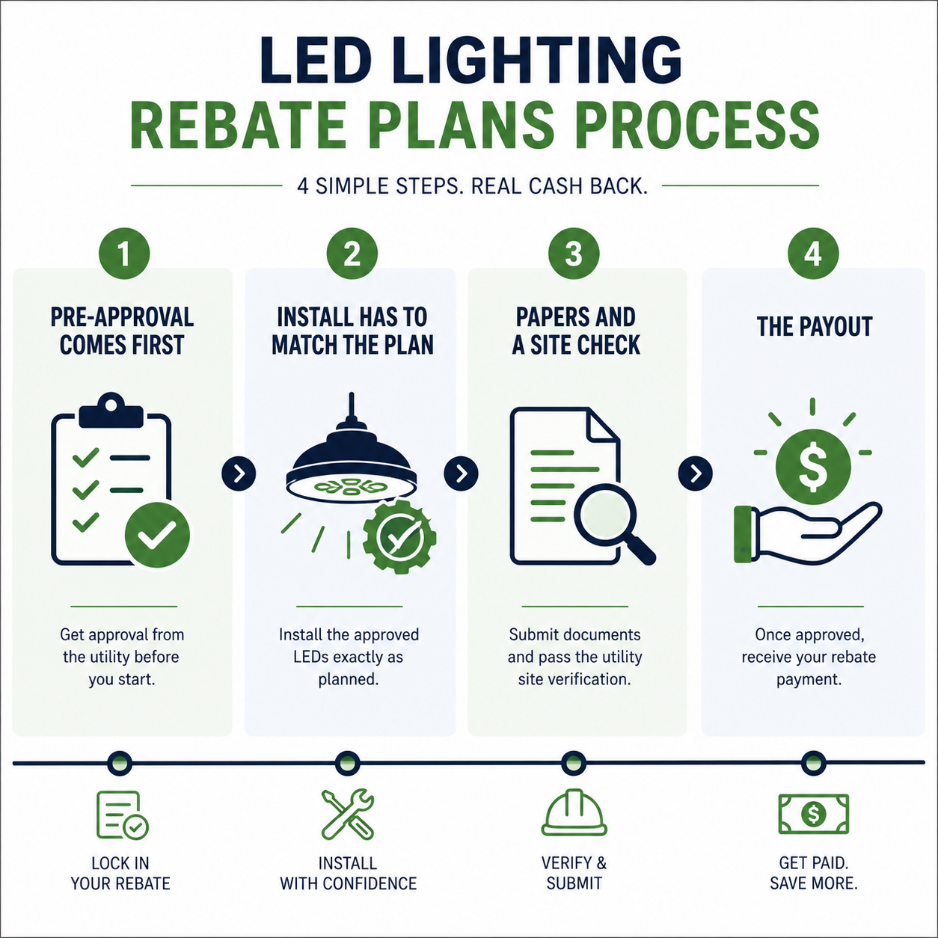
Getting real cash back from an LED lighting job comes down to one thing: rebate processing. This is a set of steps. These steps turn an LED lighting job into real money back. There are five stages. They are pre-approval, install, papers, check, and payout. Skip a step, or rush it, and your payout gets small. It can even go to zero.
That’s the whole thing in one line. Most folks only know the first step, or the last check. But the steps in between are where you win or lose cash.
Now let’s go through each stage. You’ll know just what to wait for.
Why This Process Even Exists
Power firms would rather pay you to use less power. That’s cheaper for them than a new plant. This is the whole idea behind LED lighting rebate plans.
You’ve likely paid into one of these plans. It’s a small line on your power bill. Most folks never spot it. Rebate processing is how you get that cash back. If not, it just sits there.
Step 1: Pre-Approval Comes First
You can’t put in new LED lights first, then ask for the rebate. Almost every commercial lighting rebate plan needs a yes before you touch a light.
Here’s how that goes:
- A pro comes to your site. They check your lights, power use, and hours run
- They draw up a new LED lighting plan
- That plan goes to the power firm for review
- Once it’s a yes, you get a pre-approval note
That note locks in your rebate amount. It’s your green light to start work.
Step 2: Install Has to Match the Plan
Once you get the yes, real work starts. This is where a rebate can shrink fast if no one keeps watch.
Say a light gets swapped for a new type mid-job. If the power firm isn’t told, the rebate team can flag it. Your payout could drop. It might hit zero.
The fix is easy. Keep each bill, spec sheet, and install date on file. That trail proves the job matches the plan.
Step 3: Papers and a Site Check
Once install wraps up, the real rebate processing work starts. You’ll need to show:
- Spec sheets for each light
- Photos of the done work
- A signed note that nothing changed from the plan
Most commercial lighting rebate plans also send out an inspector. This can come before and/or after the install. They check that what’s on paper is what’s up on the ceiling.
This is where cash can slip away. One light that’s off-plan, can slow, shrink, or kill your payout. The power firm is not being harsh. They need proof the cash went where it should.
Good notes make this step feel dull. That’s a good thing. Less back-and-forth means a fast payout.
Step 4: The Payout
Once it all checks out, the power firm starts the last step. This can take a few weeks. Or it can take a few months.
Your payout comes as one of these:
- A check in the mail
- A credit on your power bill
- Lower cost on a rebate-linked loan
Many power firms also give 60-month loans with no interest. You can start the job with no cash down. You pay it off slowly, on your normal bill. The rebate covers a big chunk of the cost.
Put the rebate and the loan together, and they can cover up to 80% of the full job. That’s why commercial LED lighting pays for itself fast. It beats most other upgrades a business can make.
A Quick Example
Picture a big warehouse. It still runs old, dim lights. Here’s roughly what an LED switch with rebate processing can do:
- Power use drops a lot, often 60–70%
- Light in the space gets better
- The rebate can cover a large chunk of the cost up front
- A loan covers the rest, paid off slowly through the power bill
- Upkeep costs drop too, since LED bulbs last far longer
Exact numbers shift by state, power firm, and site size. But this is the rough shape of a job done right.
Where People Lose Money
Most guides make this sound too easy. “Put in LEDs, then ask for the rebate.” That’s not how it goes in real life. Here’s where jobs go wrong:
- Starting the install before the yes
- Swapping lights without a word to the power firm
- Missing a check date
- Sending in half the papers
- Filing past the deadline
Each of these can turn a strong LED lighting rebate into a small payout. Or none at all. And you may not know it until the check just does not come.
Why Businesses Hire It Out
Rebate processing sits right in the mix of wire work, power firm rules, and papers. Few in-house teams do all three well and often enough to catch faults early.
This is why a trade ally helps. A trade ally is a firm the power company already knows. Their forms move fast. There’s less back and forth.
A good pro also builds the light plan with the rebate in mind from day one. They don’t build the job first, then try to fit a rebate to it. That one shift can mean the difference between a few grand back and tens of thousands of dollars.
It also guards you from the top risk: a job that looks great on the ceiling, but does not match what was filed. You won’t see that gap until your check is small, or it just does not show up.
Bigger Picture
Commercial LED lighting is not just an upkeep task now. It touches your power bill, your site’s worth, and at times your tax bill as a big upgrade. Rebate processing is what makes that math work in your favor.
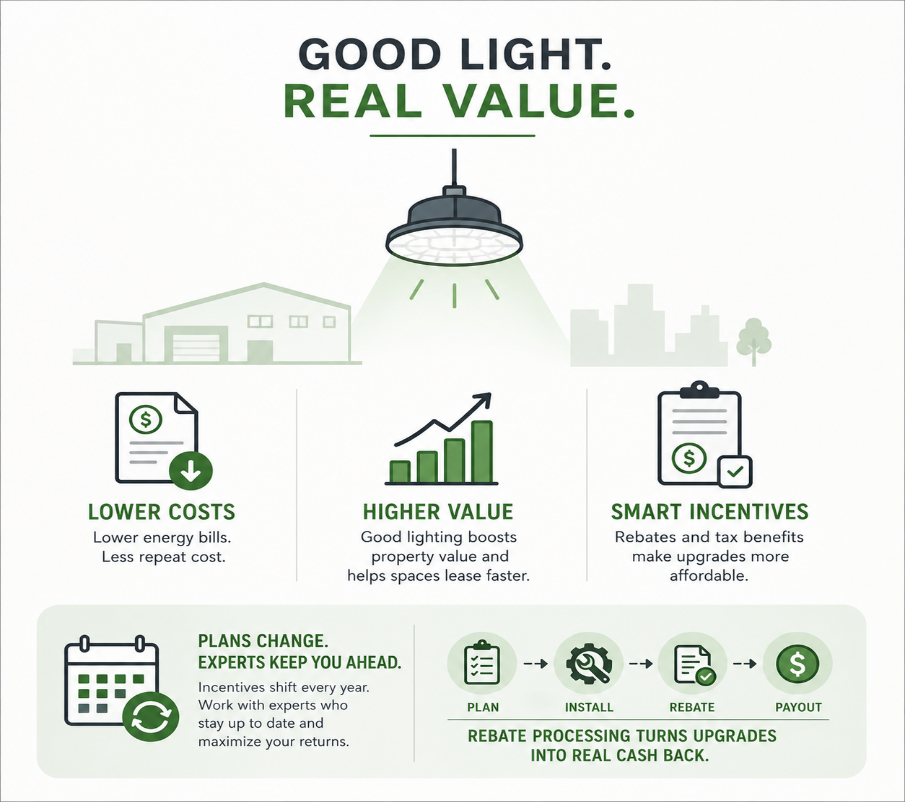
For those who lease out space, good light also tends to make a spot rent out with ease. For those who run their own shop, it’s a plain way to cut a repeat cost, with no change to the goods or the staff.
These plans shift each year. Payout sums change. Some power firms now back smart controls more than plain swaps. It’s a full-time task to keep up with all that. That’s why most strong jobs get run by folks who do this work each day.
How Vision Line Handles It
Vision Line runs commercial LED lighting jobs from the first site check to the last check. Rebate processing sits at the heart of that work. It’s not an afterthought.
As a trade ally with many power firms, Vision Line sends forms through ties that are already there. This cuts down on wait time and back-and-forth.
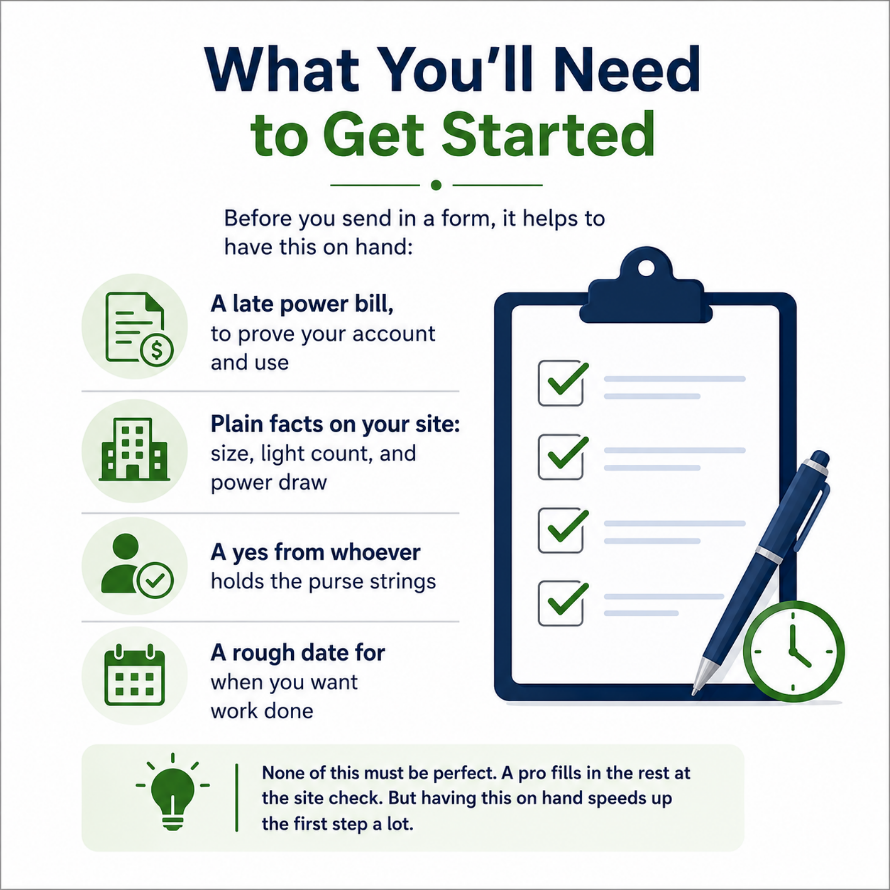
Each job starts with a free light check to find out just what your site can get. From there, Vision Line takes care of the rest:
- Gets you the first yes (pre-approval) before any work starts
- Matches the install to the approved plan, fixture for fixture
- Runs the site checks the power firm needs
- Sends in the last papers so your payout goes through
Jobs can start with no cash down, through a 60-month loan with no interest.
None of this asks you to learn power firm rules. That’s the whole point of hiring it out. You get the cash back, with none of the work.
If your site has not made the LED switch yet, odds are you’re paying into a rebate plan each month, and not claiming a cent of it. We can tell you just what you can get, and take care of the rebate processing from there.
Contact Vision Line Now!
FAQs
How long does the whole thing take?
The first yes takes a few weeks, most times. The install time hangs on site size. Payout, after the check, can take a few weeks to a few months.
Does every light qualify?
No. Most plans set a base bar for how good a light must be. Many now favor a full switch: smart controls, motion sensors, daylight sensors over plain swaps.
Can a rebate get turned down after the work is done?
Yes. If the job does not match what got the yes, or the paperwork is thin, the power firm can cut or say no to the claim. This can strike even after all is put in.
Do you need to own the site to apply?
Not each time. Renters can often apply too, with a yes from the owner. This tends to hold when the renter pays the power bill directly. It shifts by plan, so ask this at the site check.