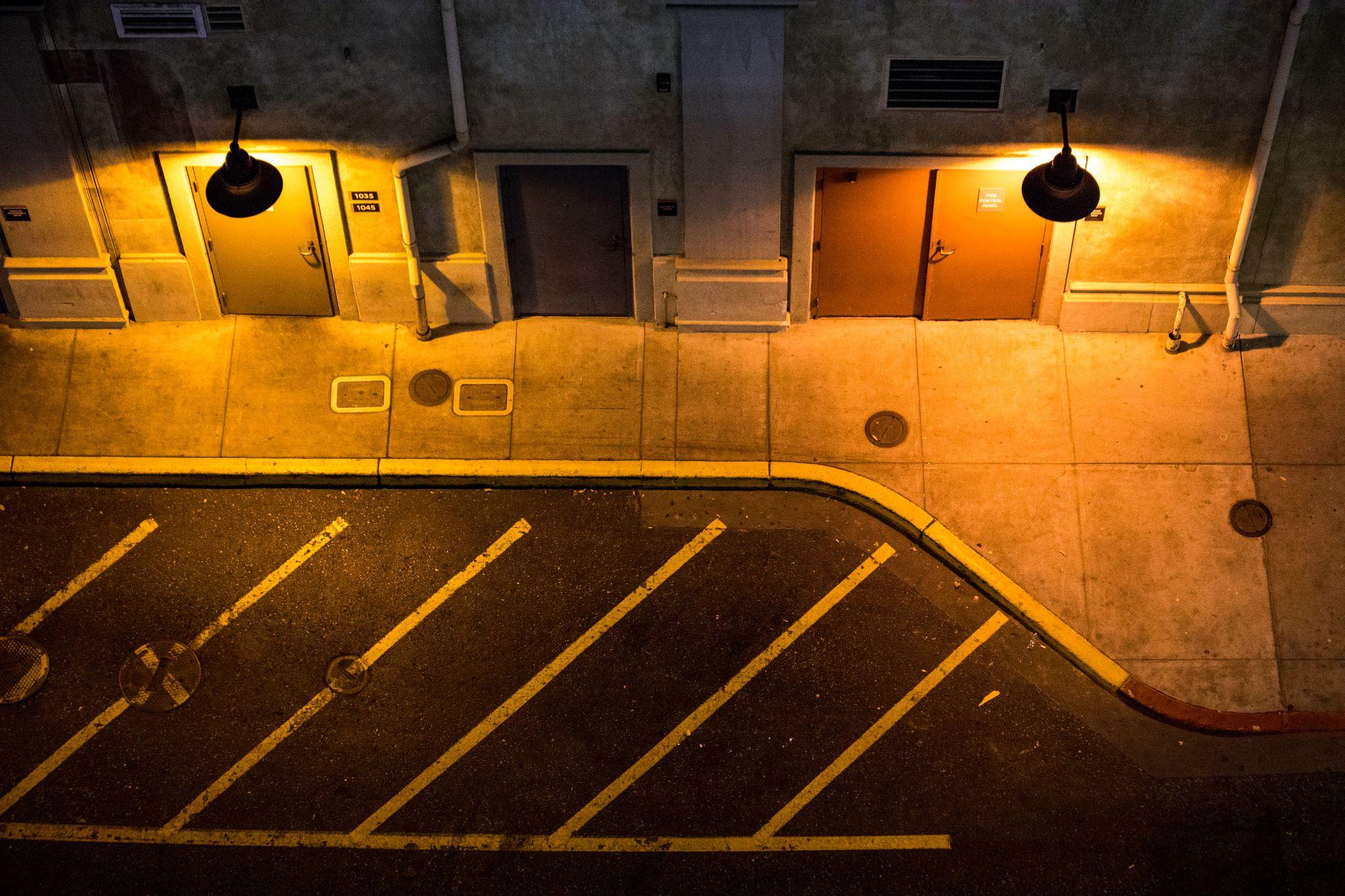
An LED retrofit swaps old HID, metal halide, high-pressure sodium, or fluorescent lights for new LED fixtures or LED kits. This move cuts energy costs by 50%-80%, makes light more even, and lowers maintenance calls. Property managers, facility directors, HOA boards, and city parking teams all ask about this upgrade.
This guide from Vision Line answers the top money, safety, and setup questions before you approve a commercial lighting retrofit.
What Is an LED Retrofit for a Parking Garage or Lot?
An LED retrofit means swapping old parking lights for new LED lights. You can install a full new fixture or a retrofit kit that fits inside the old housing. Old metal halide, HPS, or fluorescent lights last 15,000 to 24,000 hours. New LED fixtures last much longer; often 50,000 to 100,000 hours, based on the brand and how hard they work. LED lights also use less power. They turn on right away. They don’t flicker or need warm-up time.
A parking lot LED retrofit often includes:
-
LED area lights on poles for open lots
-
LED canopy lights for garage ceilings
-
Sealed LED lights for stairwells and ramps
-
LED wall packs at entries and exits
-
Add-on controls like sensors, photocells, or wireless mesh
Financial & ROI Questions
How Much Energy and Money Will an LED Retrofit Actually Save?
Most parking retrofits cut energy use by about 50%–80%. The real number depends on your old fixture wattage, your hours of use, and your power rates. A 400-watt metal halide light can often become a 100–150-watt LED light with the same or better brightness.
Adding motion sensors can save even more. Garages run all day and night, but most spaces sit empty much of the time. Dimming during quiet hours adds real savings on top of the LED switch itself.
Practical takeaway: Your savings depend on your site. Vision Line checks your current fixtures, power rates, and hours of use before picking the right fixtures and controls for you.
What Is the Typical Payback Period and ROI for a Parking Lot LED Retrofit?
Most parking lot LED projects pay for themselves in 1 to 3 years. Timing depends on the project cost, rebates, and how many hours the lights run. Payback is simple math: take your net cost after rebates, then divide it by your yearly savings.
Sites that run lights all night, like city garages, stores, and hospitals, often pay back faster. After payback, you keep saving money for the rest of the fixture’s long life. This is one reason a commercial lighting retrofit often ranks as a top capital project for facility teams.
Are Utility Rebates Available for LED Lighting Retrofits in NJ?
Yes. New Jersey utility and state programs often give rebates for an LED lighting retrofit in NJ that property owners can apply for, though rebate amounts change by area and by program. Fixtures listed with DesignLights Consortium (DLC) Premium status often get the best rebates. Rebate approval often depends on:
-
Whether the fixture holds DLC or DLC Premium status
-
How much lower the new wattage is
-
Your total lighting load
-
Whether you add controls like sensors or dimmers
Rebate rules and fixture lists change over time. Vision Line checks the current LED lighting retrofit in NJ rebate rules and confirms DLC Premium status for every project.
How Does an LED Upgrade Reduce Ongoing Maintenance Expenses?
LED fixtures last 50,000 to 100,000 hours, so you replace bulbs and ballasts far less often than with HID or fluorescent lights, which last just 15,000 to 24,000 hours. A metal halide bulb in a garage may need a swap every 2–3 years. A good LED fixture can run 10 years or more, based on use and site conditions.
Fewer repairs mean:
-
Fewer maintenance visits
-
Fewer emergency calls for dead lights
-
Lower lift and crane rental costs for tall garage ceilings
-
Less risk from dark spots nobody reported
Safety, Liability, and Security Questions
How Does Better Lighting Reduce Crime and Increase Safety in Parking Facilities?
Even LED lighting helps cut down dark zones and hidden spots where crime can happen. It does not remove all risk on its own. Old HID and fluorescent lights fade unevenly. This makes bright spots near the fixture and dark gaps between poles- perfect hiding spots.
LED fixtures, set up the right way, spread light more evenly across lanes, walkways, stairwells, and parking spots. Steady, glare-free light also helps people see and be seen. This idea is part of Crime Prevention Through Environmental Design (CPTED).
Does LED Lighting Improve CCTV and Security Camera Footage Quality?
Yes. LED lights with a high Color Rendering Index (CRI), often 70–90, plus flicker-free output, can sharpen camera footage, including license plates and faces. Results still depend on your camera type and placement. Old HPS lights give off a narrow orange-yellow glow. Their CRI often falls below 25. This makes colors look flat and footage harder to read.
LED lights also skip the flicker found in old HID and fluorescent ballasts. That flicker can confuse camera sensors, especially at fast shutter speeds used to catch moving cars.
How Does Better Lighting Help Reduce Slip, Trip, Fall, and Vehicular Liability Risk?
Good light levels in lanes, stairwells, ramps, and walkways can lower, but not erase, the risk of falls and crashes. Light levels in parking areas are measured in foot-candles.
The Illuminating Engineering Society (IES) sets foot-candle guides for each zone. Stairwells, entries, and crosswalks usually need more light than open drive lanes.
Sites with light levels below these guides may face more legal risk if someone gets hurt in a dark spot. An LED retrofit lets you redesign your lighting to meet current IES guides, not just match old, outdated light levels.
Controls & Smart Technology Questions
Why Are Occupancy Sensors and Daylight Harvesting Crucial in Parking Garages?
Garages run day and night, so sensors that dim lights in empty areas add real extra savings on top of the LED switch. Motion sensors sense cars or people and bring lights to full power right away. During quiet hours, lights drop to a lower level, often 10%–50%, based on your site rules.
Daylight sensors lower light output in open garages or lots when there’s enough sunlight. This cuts down full-power run time even more.
What Smart Lighting Control Options Exist for Parking Facilities?
Common smart controls include bi-level dimming, timed schedules, and wireless mesh networks. The best fit depends on your traffic and how you manage the site. Here’s how each one works:
|
Control Type |
How It Works |
Best For |
|
Bi-level dimming |
Light stays low, then jumps to full power when it senses motion |
Stairwells and quiet garage levels |
|
Scheduled / time-clock controls |
Lights dim or turn off on a set schedule |
Open lots with steady traffic patterns |
|
Wireless mesh network |
Fixtures send data on power use, outages, and activity to a dashboard |
Big garages, city sites, energy service firms |
|
Photocell / daylight harvesting |
Light output changes based on sunlight |
Open-deck garages and edge lighting |
Technical & Installation Logistics Questions
Is an LED Retrofit Kit or Full Fixture Replacement Required?
Your choice depends mostly on the age and condition of your current fixtures. Retrofit kits cost less and reuse old housings. Full replacement gives you a stronger warranty and better weatherproofing.
LED retrofit kits:
-
Reuse your current fixture housing and mounts
-
Cost less for parts and labor
-
Often install faster
-
Work best on housings still in good, rust-free shape
Full fixture replacement:
-
Comes with a new, sealed, weatherproof housing
-
Carries a full warranty, often 5–10 years, based on the brand
-
Works best for old, rusty, or unsafe housings
-
Gives steadier light output and DLC Premium status
How Do These Fixtures Withstand Harsh Parking Environments?
Parking fixtures are often built to IP65 or IP66 standards. This means they block dust and resist rain, moisture, and exhaust fumes. The right rating depends on where you place the fixture. IP65 fixtures block low-pressure water jets from any angle. IP66 fixtures handle high-pressure jets too, which suits lower or open garage levels.
Key features that help fixtures last include:
-
Sealed housings that block moisture and fumes
-
Rust-proof parts, like aluminum housings and hard plastic lenses
-
Wide temperature range for outdoor and open-air spots
-
Tough lenses that resist hits and vandalism
Will the Installation Disrupt Active Parking Operations?
No. Crews install LED retrofits in phases, one section or level at a time, so your garage or lot stays open the whole time. A phased plan often includes:
-
A light survey and layout plan before work starts
-
Work done at night or during slow hours
-
Level-by-level work in multi-level garages
-
Backup lights kept on in any area taken fully offline
-
Notices sent to tenants or the public as needed
Does Vision Line Handle LED Retrofits Beyond Parking Facilities?
Yes. Vision Line also handles LED retrofits for warehouses, factories, and offices, using the same skills as our garage projects.
-
Industrial LED retrofit: High-bay and low-bay lights for factory floors and loading docks. This type of industrial LED retrofit often needs tougher fixtures built for heat, dust, and heavy use.
-
Warehouse LED retrofit: Wide-beam high-bay lights for aisles, often paired with motion sensors. A warehouse LED retrofit can cut power use fast, since these lights often run for many hours each day.
-
Office LED retrofit: Flat panel lights that cut glare and boost comfort in office spaces.
If you own several types of buildings, you can bundle these projects into one commercial lighting retrofit plan. This makes rebates and upkeep simpler across your whole property, whether you need an industrial LED retrofit, a warehouse LED retrofit, or a mix of both.
Why Work with Vision Line for LED Lighting Retrofit in NJ
Vision Line plans, picks fixtures, and manages install for garages, lots, warehouses, factories, and offices across New Jersey. Property managers, HOA boards, cities, contractors, and energy firms trust Vision Line for a full LED lighting retrofit in NJ solution, including:
-
DLC and DLC Premium fixture picks for top rebate value
-
Light layout plans that meet IES safety guides
-
IP65/IP66 sealed fixtures built for tough outdoor sites
-
Phased install plans that keep your site open
-
Smart controls, including sensors, dimming, and mesh networks
Visit our website to book a site check and get a lighting plan for your property.
FAQs
How long does an LED parking lot retrofit take to install?
It depends on the size of your site. Open lots often finish in days. Multi-level garages may take a few weeks, done in phases so the site stays open.
Do LED retrofits work with existing pole and mounting infrastructure?
Usually yes, if the poles and mounts pass a safety check. Reusing them helps cut your total cost.
What foot-candle level is recommended for parking garages?
It changes by zone, not one number for the whole site. Stairwells, entries, and walkways need more light than open lanes. Vision Line follows current IES guides for every project.
Can LED retrofits qualify for both energy rebates and safety grant funding?
In some areas, yes. Cities can combine energy rebates with safety grants. Check with your local program to confirm what you qualify for.