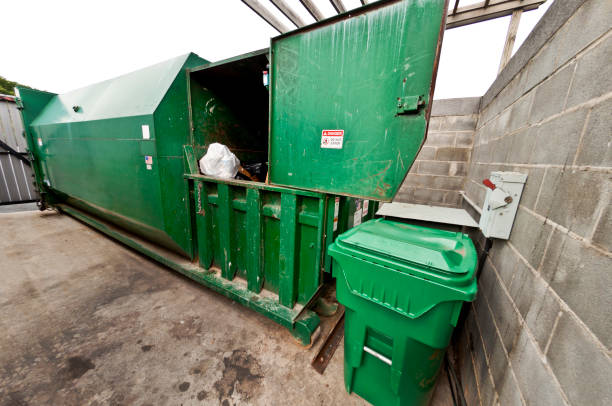
The truck pulls up. The driver sets your shiny new baler on the floor, hands you a clipboard, and leaves. Everyone feels great for about ten minutes. Then somebody asks, “So who’s wiring this thing?”
That’s where a lot of projects stall. The machine is here, but the power isn’t ready. Baler and compactor hookups take more than a long cord and a wall outlet. They need the right voltage, the right wire, and a safe way to shut everything off. Miss one piece and you get tripped breakers, long delays, or a hurt worker.
This guide explains the job in plain words. And if you’d rather hand it off, Vision Line has licensed commercial electricians NJ businesses can call to get it done right.
What Baler and Compactor Hookups Actually Include
Think of a hookup as everything between your electrical panel and the machine’s motor. A full baler electrical installation usually covers the wire, the pipe that protects it (called conduit), a safety switch, the motor starter, and testing. A compactor electrical hookup works the same way. Someone has to run the power, protect it, and prove it works.
Balers vs. Compactors: What Differs
Both machines use a motor to run a hydraulic pump, and that pump pushes a heavy metal ram. A baler squeezes cardboard or plastic into tight bundles. A compactor crushes trash so you need fewer pickups. Their power needs look alike, but motor size and controls can differ. A compactor might also have a remote switch or a “bin full” light.
Who Does What
The equipment dealer delivers and sets the machine. The electrician brings the power to it. These two jobs have to line up. If the machine arrives before the wiring is planned, it just sits there, and a machine that sits costs you money. Book both at the same time.
Power Requirements: Three Phase Power, Voltage & Motor Size
Every machine has a nameplate. That’s a metal tag listing what it needs to run. Treat it like a recipe, because good baler and compactor hookups start with following it line by line.
Three Phase Power for Balers & Compactors
Most commercial balers run on three phase power. That’s a type of electricity that shares the work across three wires, so big motors start smoothly and stay cooler. Many vertical balers list 208, 230, or 460 volts on the tag, plus a 120-volt line for the controls. Which voltage you use depends on what your building already has. Your electrician checks that first.
When Single Phase Is an Option
Some smaller machines, usually with motors around 10 horsepower or less, come in a single-phase version. If your building has no three-phase service, ask the maker before you order. Don’t guess!
Phase Rotation: The “Runs Backwards” Problem
The first time you wire a three-phase motor, it may spin the wrong way. On a hydraulic baler, that can hurt the pump. A good electrician checks the direction with a small meter before the first start and swaps two wires if needed. It takes minutes and can save you an expensive repair.
Pre-install checklist
Item to Confirm | Why It Matters | Where to Find It |
Voltage, phase, and hertz | Must match your building’s power | Machine nameplate |
Motor horsepower and amps | Sizes the wire and breaker | Nameplate or manual |
Control voltage | Tells the installer what the controls need | Wiring diagram |
Distance from the panel | Longer runs need thicker wire | Site walk |
Spare panel capacity | You may need a panel upgrade | Load check |
Dedicated Circuit, Disconnect & Motor Controls Explained
Smart baler and compactor hookups protect the machine, the building, and the people near it. Three parts do most of that work.
Why a Dedicated Circuit Matters
Big motors pull a burst of power when they start. If they share a line with other gear, breakers trip and lights flicker. A dedicated circuit gives the machine its own protected path. People ask if they can borrow power from a machine nearby. Sometimes a second unit can share a feed, but only with its own correctly sized fuse or switch. A feed built for a large machine can’t protect a small one.
The Disconnect
A disconnect is a heavy-duty switch that cuts all power to the machine. It should be lockable and easy to reach. It’s also where workers lock out the baler for repairs.
Motor Controls and Starters
The starter turns the motor on and shields it from overload. Control wiring links the buttons, key switch, and safety gates. Many balers also add a “bale made” light. When the disconnect and motor controls are set up right, the machine is safer to use every day.
Components at a glance
Part | What It Does | Safety Link |
Own power feed | Gives the motor steady power | Stops overloads |
Lockable disconnect | Cuts power at the source | Where workers lock out |
Motor starter | Starts and protects the motor | Prevents burnout |
Interlocks and key switch | Stops the ram when a gate opens | Prevents crushing |
Lockout Tagout & Safety Compliance
Balers and compactors are strong. Safety studies from NIOSH describe crushing and amputation injuries when safety gates are bypassed or when power isn’t locked off during repairs. These accidents are preventable, and safety belongs in every one of your baler and compactor hookups.
What Lockout Tagout Means
It means you shut the power off, put your own lock on the switch, and hang a tag on it. Nobody can turn the machine on while hands are inside. OSHA expects a written lockout tagout procedure for each machine. Workers use it for clearing jams, cleaning, and repairs.
Standards Your Electrician Should Design Around
ANSI Z245.5 covers balers. ANSI Z245.2 covers stationary compactors. OSHA machine guarding rules apply too. A careful installer builds with all of them in mind.
Quick note: Your electrician installs the disconnect and controls. Your team writes the procedure and trains the workers. |
Permits, Inspections & Hiring a Licensed NJ Contractor
NJ Permit & Inspection Basics
In New Jersey, most commercial jobs that add circuits or wiring need an electrical permit and an inspection. A licensed NJ electrical contractor has to do the work. Rules can vary by town, so call your local code office early. A qualified industrial electrical contractor NJ facilities hire will usually handle the permit paperwork too.
What Affects Cost & Timeline
Every site is different. These factors move the price and the schedule the most.
Factor | Effect |
Distance from the panel | Longer runs cost more in wire and labor |
Panel capacity | May require a panel upgrade |
Voltage mismatch | May need a transformer |
Equipment delivery date | Wiring should be ready before it arrives |
Existing conduit | Can speed things up or slow them down |
A compactor electrical hookup near a loading dock, for example, may need a longer wire run than one by the panel. Planning early keeps any baler electrical installation on schedule.
Questions to Ask Any Contractor
Do you hold a New Jersey electrical contractor license?
Are you insured?
Have you worked with lockout devices and safety interlocks?
Will you pull the permit and schedule the inspection?
Will you test the motor direction at startup?
Why Choose Vision Line as Your Industrial Electrical Contractor in NJ
Vision Line is known for commercial LED lighting. Its in-house, certified electricians also hold multiple state master electrical licenses, and they wire balers, forklift chargers, and new electrical panels. As an industrial electrical contractor NJ businesses can call, Vision Line is a handy single contact for sites that want one crew for several jobs.
Once your new machine is in, the area around it needs good light. Vision Line also designs and installs LED and emergency egress lighting, so one team can finish the whole space. It can also pair baler and compactor hookups with a panel upgrade when your building needs more power. From the first plan to the final test, you deal with one team instead of three.
The Bottom Line
Good baler and compactor hookups come down to four things: the right power, a lockable disconnect, a lockout plan, and a licensed installer. Get those right, and your machine runs safely from day one.
Ready to plug in? Vision Line is a team of commercial electricians NJ sites can call to walk the job, size the power, and handle the permit and testing. Email sales@visionline.co or visit visionline.co to book your site visit and get a quote.
FAQs
Do balers and compactors need three phase power?
Most commercial units do, but some smaller models come in single-phase. Check the nameplate or ask the manufacturer.
Can a baler share a circuit with another machine?
Only if each machine has its own correctly sized fuse or switch. An own circuit is the safer choice for most setups.
Do I need a permit for a compactor electrical hookup in NJ?
In most cases, yes. New wiring or circuits usually need a permit and an inspection. Confirm the details with your local code office.
Why does my new baler run backwards or fail to build pressure?
The motor’s phase rotation may be wrong. An electrician can check it and swap two wires. Stop using the machine until it’s fixed.
How long does a baler electrical installation take?
It depends on wire distance, panel capacity, and delivery dates. A site visit gives the best answer.